Whatsapp: + 84-33769-1322 Email: info@maquagroup.com
5 Surprising Facts About India’s “Incense Empire”
For centuries, incense sticks (agarbatti) have symbolized spirituality and temple culture in India. Today, however, they have evolved into a major export commodity, generating hundreds of millions of dollars annually. With production growing 8–10% per year, India’s incense industry is rapidly adapting to meet strict Western market standards.
icense sticks MAQUA GROUP
3/15/20262 min read
Below are five strategic insights into the rise of this fragrance empire on the global trade map.
1. The United States: From Spiritual Use to a Lifestyle Segment
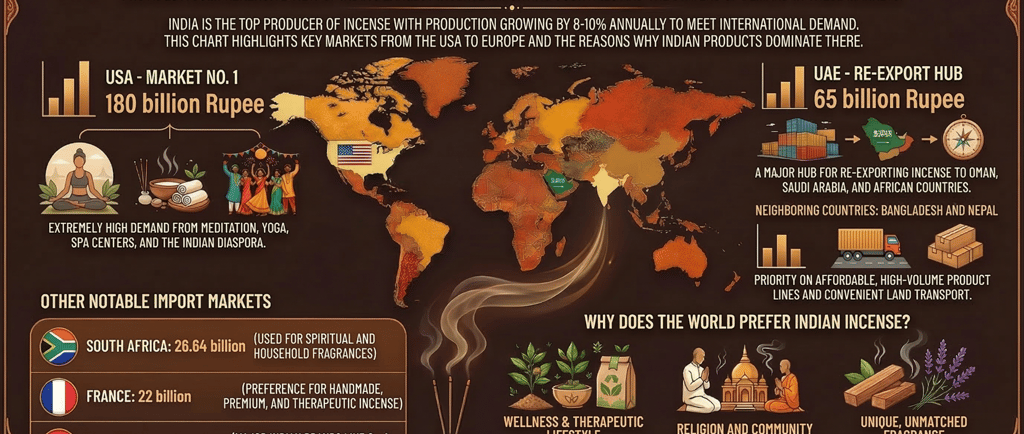
The United States has emerged as the largest importer of Indian incense in the world. Interestingly, the main growth driver is no longer limited to the Indian diaspora. Instead, it comes from the booming mental wellness movement within the domestic American market.
By integrating incense into meditation centers, yoga studios, and luxury spas, the product has moved firmly into the lifestyle segment. Rather than serving only traditional religious rituals, incense is now used as a tool for stress reduction and mental relaxation.
“The U.S. market currently leads with an impressive import value of approximately 180 crore rupees, highlighting the strong demand for signature fragrances such as sandalwood and lavender, widely used in therapeutic and wellness environments.”
2. The UAE: A Strategic Logistics Hub
With import values reaching roughly 65 crore rupees, the United Arab Emirates is not only a promising consumer market due to its Indian business community but also a critical logistics hub.
Indian exporters have implemented a highly efficient re-export strategy through the UAE. After arriving at UAE ports, incense products are redistributed to more difficult-to-access markets such as Oman, Saudi Arabia, and parts of Africa.
This model allows manufacturers to optimize operational costs, reduce transportation expenses, and manage supply chains more efficiently across the Gulf region.
3. Germany: Strict Standards for “Clean Fragrance” and Sustainability
Germany represents a classic example of how traditional products must evolve to meet modern ecological and ethical standards. German consumers tend to reject products associated with excessive smoke pollution and prioritize sustainability.
With imports reaching 16.56 crore rupees, Indian manufacturers entering this market must comply with several key requirements:
Herbal ingredients: Natural Ayurvedic incense, particularly sandalwood and lavender, is strongly preferred.
Eco-friendly packaging: Wooden or recycled paper packaging is favored over plastic.
Clean production: Incense must be manufactured to minimize smoke emissions, aligning with Germany’s green living standards.
4. France: The Art of Luxury and Exclusivity
France—long considered the global capital of perfume and aromatherapy—places strong emphasis on aesthetics and sophistication. With imports valued at 22 crore rupees, the French market leans heavily toward the luxury segment.
Consumers in France rarely favor mass-produced incense. Instead, handcrafted products with unique designs and artisanal packaging command premium prices.
This demonstrates how Indian incense has successfully upgraded its value proposition, transforming a simple traditional product into a luxury decorative and sensory item in high-end French living spaces.
5. Rising Domestic Brands and New Market Opportunities
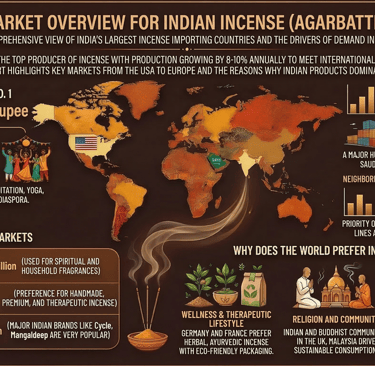
The dominance of major brands such as Cycle and Mangaldeep in markets like the United Kingdom and Indonesia (with imports around 16.45 crore rupees) has established a strong foundation for the industry.
However, significant opportunities remain for new market entrants, especially those able to leverage geographic and cost advantages.
Key emerging opportunities include:
Bangladesh: A price-sensitive market favoring budget-friendly products and large-volume supply. Manufacturers with optimized operating costs hold a strong competitive edge.
Nepal: Producers can leverage road transport from border states like Bihar and Jharkhand to supply temples and religious sites directly, minimizing international logistics barriers.
Conclusion
From humble handmade products to a global cultural ambassador, Indian incense has expanded from temple rituals to luxury boutiques in Paris and meditation studios in New York.
This success is no accident. It stems from the industry's ability to localize products—meeting Germany’s environmental standards while satisfying France’s demand for artistry and luxury.
For strategists and global businesses, the story of India’s incense industry raises an important question:
How can a product rooted in centuries-old tradition continuously evolve to meet the modern world’s strict standards?
Contact information
MAQUA GROUP Co., Ltd.
Address: 36 Trần Tử Bình , Nghĩa Đô, Hanoi, Vietnam
whatsApp: + 84-33769-1322
Email : info@maquagroup.com
Website : maquagroup.com